My Blog List

Tuesday, August 29, 2023

NATURE AND INQUIRY OF RESEARCH


1. MODULE 1: NATURE AND INQUIRY OF RESEARCH

AT THE OF THIS MODULE, YOU CAN:

1. Describe the characteristics, strengths, weaknesses, and kinds of quantitative research. 

2. Illustrate the importance of quantitative research across fields. 

3. Differentiate the kinds of variables and their uses. 

RESEARCH DEFINED

Research Is Writing. Stop Berating Yourself. - A Writer's Journey

        Innovations and breakthrough that you come to know and enjoy are products of research . Etymologically, research comes from the middle French word researche, which means ''the act of searching closely.'' 

   Additionally, the ''research'' is a combination of the prefix

re-, which means ''again,'' and the word ''search'', which  means ''to look for.'' To summarize, research is the process of looking for information once again. Its main objective is to answer questions and acquire new information, whether to solve a problem or to shed light on confusing facts.

Open Science: Sharing Your Research with the World | edX

REFLECT UPON 1 : 

What ideas of information are vague and questionable to you? How do you find answers to these questions? 

--------------------------------------------------------------------------------------------------------------------------------------------------------------------------------------------------------------------------------------------------------------------------------------------------------------------------------------------------------------------------------------------------------------------------


RESEARCH AND SCIENCE
Crisis in basic research: scientists publish too much          
            RESEARCH when you become curious and doubtful about existing phenomena, you gear toward the discovery of better knowledge. You read books, search the Internet, or ask questions. Then you put all these pieces of information together to clarify your idea or add new ones. This process of doing research is informal, because it does not strictly follow procedures and it relies more on casual observation and opinions.

More so, the results of this research process become more susceptible to skepticism even though the research generated answers to questions. For research to be more accurate and beneficial, science is embedded in its process. 

Funding priorities of Science Foundation Ireland need re-balancing

         SCIENCE is conceptualized as a procedural and systematic approach in gaining new knowledge by making thorough observations and using controlled and precise methods. So knowledge gained from science is not bas on subjective or personal views; it rather comes from objective or tangible pieces of evidence which come from a meticulously designed research study. In this regard, a research done scientifically is more accurate, reliable, and valid.

             Are you BIG in your organization? The Big Idea Guru! | Innovators ...             Research is a process of gathering data to prove a claim, test existing hypotheses, and find answers and solutions on pressing problems at hand. It generates knowledge that aims to describe, explain, and predict events.


SCIENTIFIC METHOD IN RESEARCH 

            The process of conducting research scientifically involves a systematic collection and investigation of data through the scientific method. It provides a set of clear and settled guidelines for collecting, assessing, and detailing data in the context of a research study. 

       Knowledge that came from research employs scientific method is characterized by the following elements: 

The empirical cycle (De Groot, 1961) | Download Scientific Diagram

1. EMPIRICAL APPROACH : Knowledge is gained through direct observation and experimentation. Only those data derived from scientific procedures are considered factual. Thereby, you ignore your preconceived notion about the construct understudy. You also disregard your feelings and opinions about it. 

2. OBSERVATION : Your awareness of your environment constitutes your ideas. But if you rely on your awareness alone, it results in information bias, decreasing the validity of your findings. To increase the veracity of the information you gained from observation, you have to measure it carefully using an appropriate instrument. For example, if you want to find out how far A is from B, you do not rely on your estimate of distance that merely come from your vision. Instead, you should use measuring instrument to measure the distance between two cars to yield precise data. 

The Big Ideas Initiative is introduced to facilitate change on the ...  In conducting research, scientific procedures must be applied to obtain reliable and accurate information.


3. QUESTION:

Knowledge comes from inquiries that are answerable. Questions must be answered through scientific investigation and must generate tangible proof. A question is unanswerable when it is deemed impossible for realistic exploration, no matter how intriguing it may be. The following is an example : ''What is the butterfly's level of well-being as it eats nectar from flower?'' 

Despite the fact that it can really result in a breakthrough, the preceding inquiry is unfeasible to be studied given the present state of science. Therefore, a question that yields knowledgeable information must have an obtainable answer based on the current scientific procedures available. Consider the following question: ''Is there an increase in test scores among students when they attended a tutorial class?''  the foregoing inquiry could definitely be investigated using available scientific methods because it is realistically measurable and concrete pieces of evidence are produced. 

HYPOTHESES: 

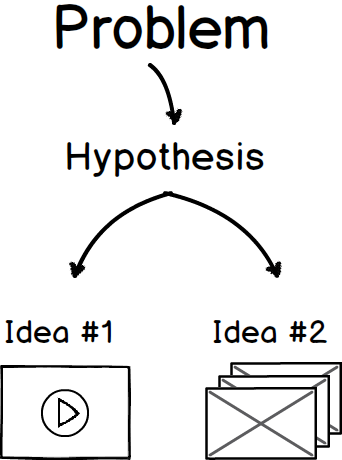
An educated guess, or hypothesis, is an attempt to explain a phenomena. Once formulated, it should help you formulate prediction. Therefore, it must be testable for analysis and interpretation. For example : ''There is significant increase of voters when registration is duly advertised.'' 
A/B Testing Tutorial: Go from Beginner to Pro | CXL

This hypothesis can be tried through experiment. Any result that comes from it guarantees scientific foundation. 

EXPERIMENTS: 

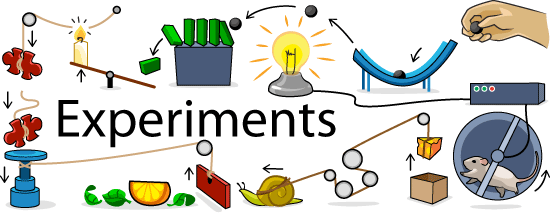
The given hypothesis should assure testability in a crafted condition for the accuracy and reliability of results. 
Experiments | Ask A Biologist

The process of experimentation itself is a proof of scientific procedures. And so, the findings are considered truthful. 


6. ANALYSES: 

            For findings to be reliable, the data gathered are subjected for analysis through statistical methods. The statistical treatment to be employed depends on the design of the study, type of data, and given questions. 

Advocacy, Analysis, and the Vital Importance of Discriminating ...

             You have to use statistics because it presents numerical evidence of the degree in which the results are considered valid and reliable. Also,, it minimizes the chance of having a faulty conclusion about the object of investigation. 

7. CONCLUSION:

          The process of making inferences involves concrete data to rule out opinions. Usually, a conclusion must be objective and supported by meticulous analysis of data. You should avoid adding more to what is literally available. For example, if the results of the study proved that the students' scores increased after exposure to tutorial classes, you should only concentrate on this given set of data in making your inferences. 


Learn How to Write a Dissertation Conclusion

        It is not visible to relate other classes that the students attend that might help increase their scores. In doing so, the present data will be contaminated with your subjective analysis, thereby weakening the scientific procedures employed. 


8. REPLICATION 

             This means doing the same study once again to a different set of participants to test the soundness of the obtained result. The importance and prevalence of replication research varies greatly on the discipline and research area. Conducting the study for the several times will pave the way for additional and essential purposes: 

The Rules of Replication | The Scientist Magazine®

a. Establishing of reliability of findings : This previous data that were proven will have a stronger belief factor. 

b. Discovery of new knowledge : Most often, replication generates additional information or brand new data that will improve your knowledge acquisition and enlighten your confusion, if any.

c. Ascertainment of the generalizability of results: This means that the results of the study can be applied to other groups of participants and, therefore, don not only limit to the original samples. 


GOALS OF RESEARCH 

        When you follow the scientific method in conducting research, you offer an explanation or clarification to the phenomena in question with greater reliability and validity. Every field of study relies so much on this process to introduce advancement, novelty, and progress. Research, therefore, serves as the pillar of global transformation. The following comprises the goals of research: 

Leadership = focus on accomplishing the goal, not advocating for ...Goal Clip Art | k10783321 | Fotosearch

1. DESCRIPTION - This refers to the way in which the phenomena being studied is defined, classified, and categorized. The goal of describing is to provide essential information. 

2. PREDICTION - It entails stating the possible consequences of present events events based on existing knowledge of something else. The purpose of prediction is to control one's action and behavior through careful planning derived from a given set of information.

3. UNDERSTANDING/EXPLANATION- This is the process of analyzing information to find out the causes behind phenomena. To understand and explain data, a relationship between events must already be established; one should cause the effect to the other; and other explanations of casualty between them must be ruled out. 

Thursday, April 20, 2023

BRIDGING THE GAP Henry F. Funtecha, Ph.D. The Filipino language as spirit of national identity

 Today, there is no denying the necessity of learning how to speak and write in the English language, especially that it has become the language of globalization. The Philippine government itself has made pronouncements with regards to the importance of being good speakers of English in order for the Filipinos to be globally competitive. This is done by the continuous use of English as the medium of instruction in schools and by making it as the preferred language of communication.

So, the question is, "Is there still a need for the Filipinos to develop a national language?" It must be recalled that the Philippines started to work for the promotion of Tagalog or, later, Filipino as the country's national language as early as the 1930s during the Commonwealth period. Yet, up to now, the people cannot even agree on what the Filipino language really is. Worst, is that there are Philippine ethnic groups that oppose the use of Filipino even in the singing of the Philippine national anthem. While other countries that started late in developing a national language already speak that singular language, the Filipinos could not even decide yet what to do. Indonesia, the largest archipelago in the world, with about a thousand languages, can now claim to have Bahasa, its national language. Same thing with Malaysia. The rest of the countries in Asia have already their own national languages.

Language is always tied up to one's culture and, of course, his identity. However, the Filipinos cannot even speak anymore of cultural identity, with some social scientists even talking of a "damaged culture". As a people, the Filipinos have extensively adapted and substantially adopted the Western culture. Racially speaking, their features do not differ from the rest of the Southeast Asians such as the Myanmarese, Kampucheans, Vietnamese, Malaysians and Indonesians. Maybe, in todays world and in the future, it is only language that may make the Filipinos distinct from their neighboring Southeast Asians. Even if English is becoming to be the world's dominant language, it is still necessary for the Filipinos to speak their national language or their regional language. After all, it is the only language that can really, in essence, capture the feelings and sentiments of the people, and can represent their true spirit as Filipinos. Also, language can help promote unity within the country and develop a sense of belongingness. Chinese and Japanese display their strength and unity through speaking their own national language and they are more progressive compared to the Filipinos.

It is admitted that by knowing English, thousands of Filipinos have found jobs abroad. But, most of these works subject Filipinos to servitude to foreigners as domestic helpers, care-givers and nurses. Is this the Philippines' idea of competitiveness? True competition is when the Filipinos become capitalists, entrepreneurs, traders, school owners, building contractors, and exporters of Philippine goods in other countries.

The Philippines' national hero, Jose Rizal, expressed the utmostimportance of loving one's country through loving one's language, among others. He wrote in Filipino: "Ang di marunong magmahal sa sariling wika, ay mas masahol pa sa malansang isda." He said that it is difficult to consider one as a nationalist if he was ashamed of his own language. This is an important matter for one who does not give value to his native language, whether national or regional, to be aware of. It is sad to note that, in today's times, there are many Filipinos who admire their countrymen who are very good in speaking the English language but consider those not good in English as not as intelligent or not as knowledgeable as the others.

Yes, it is important for the Filipinos to be able to communicate very well in English. But, every one who thinks of himself as Filipino has also the responsibility to love the country of his birth and, naturally, his own language. It is only in their language that the Filipinos are able to distinguish themselves from other peoples of Asia, especially now that it is already possible to change the color of the skin and the shape and features of the face. In a sense, it is only the language that seem to be the remaining link to the Filipino spirit and his potential towards a lasting national identity.

Monday, April 3, 2023

CLASSICAL VS. POPULAR MUSIC by James Manheim

Do you like classical music?” It may be that you’re a little embarrassed by the question.”Yes,” some people answer, “but I don’t know anything about music.” Well, if you’ve encountered a piece of classical music that you loved, then you know more than you think you do. Classical music is everywhere around us—in movies, in television commercials, in schools, in the memories of our parents and grandparents. Anywhere that has caught your attention is a good place to start.


Whether you sit down to master classical harmony or rock guitar, you’ll study chords and how they fit together either way. If you learn to play an instrument, you’ll most likely learn both classical and popular selections—and you’ll find that musicians don’t tend to worry much about categories. Classical music and popular music, both part of the cultural frame of reference of most Americans and Europeans, share many aspects of musical language. Yet there are some prominent differences as well. Coming to classical music from popular music is less of a leap than you might think, but there are a few ways in which you have to retune your ears.


One important difference comes in regard to duration. Popular songs are usually brief; most of them are under five minutes long. Classical compositions, on the other hand, range from 20-second pieces to works that last several hours. The average symphonic concert work lasts perhaps half an hour, and this requires a change of perspective for those accustomed to listening to popular songs. How does a composer make such a large piece of music hang together? It’s a question worth asking of any piece of music, but for classical compositions, it’s one of critical importance.


Another difference is that popular music is mostly vocal music. Be it rock, country, r&b, or pop, ballads, or dance music, there is usually a singer and a text that carries a major share of a composition’s meaning. But vocal music is only a province, and not even the most extended province, of classical music. Even in the realms of opera and art song, the music is the message.


Though classical music is very much a living tradition today, it also has a thousand-year history of having been preserved for posterity by musical notation. Popular music, sometimes notated but often including spontaneous elements, has a deep history of its own, of course. Yet our knowledge of music that was never written down is limited to a period beginning just over a century ago, when the first recordings were made. Notation allows, if not greater complexity, at least a greater degree of control over musical events on the part of a composer external to a given performance of a piece. Whereas a pop recording, very broadly speaking, depends on an interaction between performer and song, classical music rests on a triad: composer, work, and performer.


And generally speaking, the dynamic range, the difference in volume between the loudest and the softest moments, is greater in classical music than in pop. Some pieces are very loud, some are very soft, and some vary widely within a single piece, sometimes so extreme as to have made it nearly impossible to capture the full range in recordings before the arrival of digital techniques. The distinction here is not a hard and fast one, but it’s no accident that the salesperson at a high-end stereo shop will bring out a classical CD to demonstrate what a fine pair of speakers can do.


A. PROCESSING QUESTIONS: 


1. Based on the article, what is classical music?


2. Based on the article, what is popular music?


3. How is classical music different from popular music? 


4. What are the characteristics of classical music that make it distinct among either genres? What about popular music?


5. Did your musical preference change after reading the article? Why? Why not? 


6. If there is essential information that you would like to add to the article, what would it be? Why? 


B. Complete the category below based on the article about classical and popular music. 

ATTRIBUTES: 

1.

2. 

3. 


CLASSICAL MUSIC

1.

2. 

3. 


POPULAR MUSIC

1. 

2. 

3. 


Thursday, March 23, 2023

Green Holiday Tips Greenpeace Philippines December 20, 2013

Green Holiday Tips

A feature from Greenpeace Philippines 
Published on December 20, 2012


The holidays are a time for family and celebration and these festivities also negatively impact the environment. From the millions decorations that must be disposed of, to the tons of gift wrappers and increase in energy usage to keep the colored lights blinking and dancing, the holidays cause a lot of damage. But hey! Small changes can make a huge difference.

So here are some simple ways for you to cut waste, conserve energy and otherwise be green during this holiday season. Many of the ideas can be used year-round!


Why spend more on new Holiday knick-knacks when you can make your own out of recycled materials?

You’ll be surprised at what you can make out of unwanted items hidden away in your household. Try making hanging lanterns using old jars and wire, hand cut paper snowflakes out of newspaper, or even Christmas Tree ornaments with the ribbons and cards from last year’s gifts. This is a great way to test your creativity and celebrate an eco-friendly Yuletide season.

Is the Yuletide season still a time for giving, or has it become a time for spending?

The consumerist aspect of the holidays is getting in the way of the things that truly make this season special. This year, why not offer service instead? Volunteer to do relief work, or write up personalized coupons—redeemable favors such as doing the dishes or walking the dog—for your loved ones.

It’s easy to be bedazzled by the blinking and dancing Christmas lights that we see, forgetting that this means additional energy use.

Using energy efficient Christmas lights hits two goals in one step: cutting down on energy use and savings on energy costs. One good way to do this is to use LED (light emitting diode) Christmas lights. They may be a little more expensive than incandescent lights but they definitely consume less energy. Plus, they last longer too. That means you get to keep your Christmas lights for more Christmas seasons, giving you more savings in the long run. You also reduce the amount of waste to be disposed, another step in being more environment-friendly.

There are additional ways to reduce energy consumption during Christmas season. You can combine your Christmas lights with the following to reduce energy consumption. Timers control how long your lights are on and turn them off when you are not home. Extension cords instead of using light strings to add length to your display, utilize extension cords in less visible areas.


If you cannot help it and you think that buying someone a gift is a sure way to express your appreciation for someone (instead of offering acts of kindness, Green Holiday Tip #2), then opt for eco-friendly gifts.

Whether it’s a journal with hand-made paper for your friend, a hand-woven skirt by Ifugao mothers for your sister, or a folding bike for your brother, keep in mind that there are many ways to show both kindness and appreciation for your loved ones and love for the environment.

Better yet, avoid the malls when doing your Christmas shopping. Instead opt for bazaars, trade fairs, and weekend markets that offer the best local products that consider the environment, fair trade, and local artists and craftsmen in the production. Many of them also pledge to donate part of their profits to reconstruction and rehabilitation efforts for our brothers and sisters affected by Typhoon Yolanda.

You wouldn’t want to get your loved ones clothes that have hazardous chemicals on them.

You want to give them garments they can proudly wear, brought to us by companies that care about the environment as much as their brand’s names. We’re talking about the Detox #Leaders – companies spearheading the path to a toxic-free future.

Use your power as a consumer by supporting brands that are honest and are truly working to eliminate all releases of hazardous chemicals into our water.

Use Guide to Greener Electronics to ask questions about the environmental impact of electronic products.

With the Christmas bonus in your hands, you can always think of a thousand ways to justify the need for a new gadget. You don’t need to be a techie to know which electronic products are “green.” You just need to check out the Greenpeace.

Remember however, that the most sustainable devices are the ones you don’t actually buy! Work to extend the life of your existing electronic gadgets and only purchase what you truly need.

FACT: It takes 1.3 kg of coal to produce 1 kg of wrapping paper, and the manufacturing process emits 3.5 kg of CO2 — and that excludes the carbon footprint of packaging and then transporting the wrapping paper around the country.

We encourage you to use reusable and/or personalized gift-wraps instead. Rather than buying new gift boxes, why not encase your goodies in used cans or cylinders you painted yourself? You can even wrap your present in a scarf or handkerchief; this way, the wrapper itself can be part of your gift.

The Christmas holidays are one of those long holidays that travelers look forward to every year. But do you know that traveling adds to your carbon footprint especially when you ride a plane, use disposable utensils for eating, and stay at posh resorts?

It’s exactly a week before Christmas! Have you done your shopping for Noche Buena? If not, here’s something to consider: Why not do your shopping at the nearest organic market and try to come up with a Noche Buena feast made from organic and GMO-free food?You can also ask your friends to do the same and have a challenge on who can come up with the most number of healthy ingredients on their Noche Buena table. Remember, you can have a healthy and environment-friendly Noche Buena for your friends and family.

Lastly, Impress your friends and family this year with a low-cost, creative, green holiday bash. Here are some suggestions on how you can upgrade your traditional gathering into an Earth-friendly one: Use electronic invitations to get the word out. Set the ambiance with personalized decors out of recycled materials (get creative!), and energy-efficient LED fairy lights. Start the party early to make use of natural light. Serve organic dishes made from fresh food bought from the local market. Food from the markets generally has less packaging than supermarket foods and has not traveled as far. Use reusable dinnerware instead of disposables as much as possible. Place clearly marked recycling and non-recycling bins out for your guests.


ANSWER THE FOLLOWING QUESTIONS:

1. What is the purpose of the author?

2. How does the celebration of holidays affect the environment? Cite specific examples?

3. According to the article, what are some ways to celebrate holidays without causing damage to the environment?

4. Name three tips from the article that you think are most effective. Defend your answer. 

5. Among the tips/suggestions given, which do you think is the least effective? Why? 

6. As a student, what other specific measures can you take to protect the environment from further destruction?

7. Is the article well-written? Why do you say so?

8. Are the facts reliable? Defend your answer. 

9. Are the ideas logically presented? Cite textual evidence. 


Thursday, March 16, 2023

THE BURDEN OF THE POOR


The burden of the poor


    A distinguished visitor from the United Kingdom asked why so many people carry guns. I replied: The rich fear the poor. As the prosperity gap becomes wider, those who have prized possessions feel the need to protect themselves from the prying eyes of those who have less. We need not be antirich, but the rich need to be pro-poor.

    My own life went from riches to rags and then back to one of very real privilege. Up to my mid-teens, I lacked nothing. I lived among the elite, went to top private schools, and traveled the world. Then, overnight, a civil war and the loss of my father’s income for three years forced me to return to the land of my birth, the United Kingdom, as a refugee. I overheard my mother saying she was down to one week’s worth of spending money. I got a job the next day and never again relied on parental financial support. I went to university on a full state grant reserved for the poor. My work as a student, in factories, hotels, and restaurants, and as a door-to-door salesman, brought me into direct contact with the desperately rich and poor.


    My salvation was education. My final year at university was focused not just on studies. I had to find work to survive. After 30 interviews and five job offers, I chose a career in banking, and the rest is history. But my real education came through other life experiences. When I was a child, my mother told me to never force a person to bend to serve unnecessarily but if they had to, then I had to appreciate the dignity of labor. So, no unmade beds or clothes strewn across the floor. Instead, my parents funded the education of the children of our household staff. Under my grandfather’s tutelage, I learned how to resolve disputes and offer fairness among the farmers who tended to the family land. To this day, I am at ease with rural people and I can eat with my hands even though the silver spoon that was taken away from me as a teenager has now been restored.


    The poor do not need sympathy, patronage, or the largesse of politicians who distribute taxpayer money as though it were their own. Well-meaning charity, except for emergencies, needs to focus on livelihoods, not short-term gestures. Elimination of absolute poverty can only happen if government and the well-off make it their priority. People thrive on opportunity. Education and health enable the poor to climb out of adversity. Schools, teachers and books are vital, but the lack of shoes, clothes or food can stop children from learning. Government programs and spending can succeed if there is real accountability for outcomes where success is rewarded and failure does not go unpunished.


    Urban development that does not cater to accessible and affordable social housing means that the poor will be unable to service the needs of the rich in their gated communities and condos. Developers should not be allowed to build unless they are also prepared to provide sustaining infrastructure close to the community and not in some far-flung place. Instead of focusing on eyesore vistas of squatters and the inconvenience of tricycles and PUVs that get in the way of dark-tinted SUVs, the aim should be to invest in employment in the source communities of migrants and in public transport that reduces the commute to work for all. The poor cannot be made invisible. People live in squalor in cities, not by choice but because they are not valued as a community asset. Slum dwellers are frightening, but their impoverished relatives in the provinces are romanticized as indigenous people.


    Not everyone who has made their fortune is lost in a dizzy pursuit of consumption and affected gaiety. First-generation wealth generators, in particular, have better grounding and understanding of turning adversity into opportunity. They tend to have a closer bond with the people who help make their enterprise a success. Instead of using corporate social responsibility as an adjunct of the PR department, their values and actions in sustaining communities are an integral part of the business model.


    Pay living wages, not the minimum. Create opportunity through social enterprise. Take the lack of toilets and bathing facilities, for example. Small amounts of capital, low-cost design and municipal support can not only entice people into starting such businesses but also solve a dire community need. Microfinance, especially in the hands of women, can turn a squatter into an entrepreneur.


    Agriculture can move from being a backbreaking source of bare subsistence to a mode where more of the value added is at source and the stranglehold of middlemen and lack of paths to markets are overcome. What is lacking is not the will of the poor to work, it is the absence of modern farming methods, poor knowledge of higher-yield crops, and ineffective husbandry of natural resources. As consumers, we have to learn to value, afford dignity and provide deserving returns to those who bend their backs so that we can stand straight.


    I have learned a few salutary lessons from the poor. In an impending natural disaster, I saw well-to-do people clear the supermarkets of goods as soon as the shelves were stocked. In wet markets in the same city, the poor bought only what they needed. They never ran out of stock. In another scene, we carefully distributed aid based on our perception of who needed what. We returned only to find that the recipients redistributed what we gave them. And then there was the case of a lady squatter who lost everything in a typhoon. She used a third of our donation to house her family; the rest went into a roadside stall. She now earns seven times what we gave her per month!


    Unleashing the potential of the poor is a far better safeguard than living with armed security guards.


1. ANSWER THE FOLLOWING QUESTIONS:

1. What is the essay about? (30words)

2. What is the main contention of the writer in this article? (30words)

3. What are the strong and weak points of this article? (30words)

4. According to the writer, how can people move out of poverty?(30words)

5. Do you agree with his opinions? Why or why not? (30words)

6. In your perspective, how can poverty be addressed or alleviated a huge question? (30words)

II. BASED ON THE ARTICLE ABOUT POVERTY, COMPLETE THE POINTS BELOW: 

1. Thesis Statement
        
        Reason or Supporting Idea 1: 
    
        Reason or Supporting Idea 2: 

         Reason or Supporting Idea 2: 


               Facts or Examples:
        
               Facts or Examples:

               Facts or Examples:


                Conclusion: 


Friday, March 10, 2023

Am a Filipino by Carlos P. Romulo

I Am a Filipino by Carlos P. Romulo

I am a Filipino–an inheritor of a glorious past, hostage to the uncertain future. As such I must prove equal to a two-fold task–the task of meeting my responsibility to the past, and the task of performing my obligation to the future. LEON

I sprung from a hardy race, child many generations removed of ancient Malayan pioneers. Across the centuries the memory comes rushing back to me: of brown-skinned men putting out to sea in ships that were as frail as their hearts were stout. Over the sea I see them come, borne upon the billowing wave and the whistling wind, carried upon the mighty swell of hope–hope in the free abundance of new land that was to be their home and their children’s forever. CAPIO

This is the land they sought and found. Every inch of shore that their eyes first set upon, every hill and mountain that beckoned to them with a green-and-purple invitation, every mile of rolling plain that their view encompassed, every river and lake that promised a plentiful living and the fruitfulness of commerce, is a hallowed spot to me.

By the strength of their hearts and hands, by every right of law, human and divine, this land and all the appurtenances thereof–the black and fertile soil, the seas and lakes and rivers teeming with fish, the forests with their inexhaustible wealth in wild life and timber, the mountains with their bowels swollen with minerals–the whole of this rich and happy land has been, for centuries without number, the land of my fathers. This land I received in trust from them and in trust will pass it to my children, and so on until the world is no more.

I am a Filipino. In my blood runs the immortal seed of heroes–seed that flowered down the centuries in deeds of courage and defiance. In my veins yet pulses the same hot blood that sent Lapulapu to battle against the first invader of this land, that nerved Lakandula in the combat against the alien foe, that drove Diego Silang and Dagohoy into rebellion against the foreign oppressor.

That seed is immortal. It is the self-same seed that flowered in the heart of Jose Rizal that morning in Bagumbayan when a volley of shots put an end to all that was mortal of him and made his spirit deathless forever, the same that flowered in the hearts of Bonifacio in Balintawak, of Gregorio del Pilar at Tirad Pass, of Antonio Luna at Calumpit; that bloomed in flowers of frustration in the sad heart of Emilio Aguinaldo at Palanan, and yet burst fourth royally again in the proud heart of Manuel L. Quezon when he stood at last on the threshold of ancient MalacaƱang Palace, in the symbolic act of possession and racial vindication.

The seed I bear within me is an immortal seed. It is the mark of my manhood, the symbol of dignity as a human being. Like the seeds that were once buried in the tomb of Tutankhamen many thousand years ago, it shall grow and flower and bear fruit again. It is the insignia of my race, and my generation is but a stage in the unending search of my people for freedom and happiness.

I am a Filipino, child of the marriage of the East and the West. The East, with its languor and mysticism, its passivity and endurance, was my mother, and my sire was the West that came thundering across the seas with the Cross and Sword and the Machine. I am of the East, an eager participant in its spirit, and in its struggles for liberation from the imperialist yoke. But I also know that the East must awake from its centuried sleep, shake off the lethargy that has bound his limbs, and start moving where destiny awaits.

For I, too, am of the West, and the vigorous peoples of the West have destroyed forever the peace and quiet that once were ours. I can no longer live, a being apart from those whose world now trembles to the roar of bomb and cannon-shot. I cannot say of a matter of universal life-and-death, of freedom and slavery for all mankind, that it concerns me not. For no man and no nation is an island, but a part of the main, there is no longer any East and West–only individuals and nations making those momentous choices which are the hinges upon which history resolves.

At the vanguard of progress in this part of the world I stand–a forlorn figure in the eyes of some, but not one defeated and lost. For, through the thick, interlacing branches of habit and custom above me, I have seen the light of the sun, and I know that it is good. I have seen the light of justice and equality and freedom, my heart has been lifted by the vision of democracy, and I shall not rest until my land and my people shall have been blessed by these, beyond the power of any man or nation to subvert or destroy.

I am a Filipino, and this is my inheritance. What pledge shall I give that I may prove worthy of my inheritance? I shall give the pledge that has come ringing down the corridors of the centuries, and it shall be compounded of the joyous cries of my Malayan forebears when first they saw the contours of this land loom before their eyes, of the battle cries that have resounded in every field of combat from Mactan to Tirad Pass, of the voices of my people when they sing:

Land of the morning,

Child of the sun returning–

* * * *

Ne’er shall invaders

Trample thy sacred shore.

Out of the lush green of these seven thousand isles, out of the heartstrings of sixteen million people all vibrating to one song, I shall weave the mighty fabric of my pledge. Out of the songs of the farmers at sunrise when they go to labor in the fields, out of the sweat of the hard-bitten pioneers in Mal-lig and Koronadal, out of the silent endurance of stevedores at the piers and the ominous grumbling of peasants in Pampanga, out of the first cries of babies newly born and the lullabies that mothers sing, out of the crashing of gears and the whine of turbines in the factories, out of the crunch of plough-shares upturning the earth, out of the limitless patience of teachers in the classrooms and doctors in the clinics, out of the tramp of soldiers marching, I shall make the pattern of my pledge:

“I am a Filipino born to freedom, and I shall not rest until freedom shall have been added unto my inheritance—for myself and my children and my children’s children—forever.”


PROCESSING QUESTIONS: 

1. Describe the natural resources of the Philippines as mentioned by Carlos P. Romulo. 

2. What does Romulo mean when he wrote that in our blood runs the ''immortal seeds of heroes''?

3. Do you believe that you are a ''child of the marriage of the East and the West''? Expound in no more than five sentences. 

4. Cite the deeds of Filipino heroes mentioned in the essay. 

5. If you were to make a pledge to the country, what would it be? 

6. List down all the transitional devices used in the essay. 

7. Analyze the pattern of the text accordingly. An Analysis based on the following a) Narration; b) Description; 

c) Comparison and Contrast; d) Cause and Effect; e) Exemplication and Classification; d) Persuasion  

EXPRESS YOUR PERSPECTIVE!

  WRITE YOUR POSITION PAPER FOLLOWING THESE STEPS. POST YOUR POSITION PAPER ON THE COMMENT SECTION.  1. Choose a Topic: Select a specific a...